News
 AS ZERO-EMISSION PLANT GROWS, VERIFICATION BECOMES THE NEXT CHALLENGE
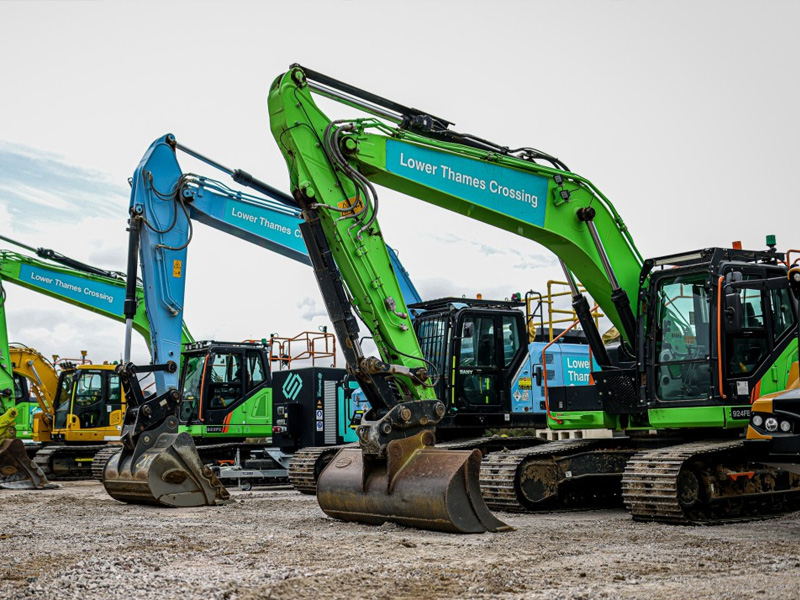
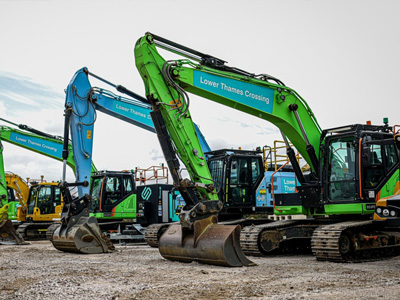
The Lower Thames Crossing is offering a glimpse of what the future construction site could look like, with more than 30 zero-emission machines already at work and around 150 expected at the height of construction in 2028.
For the construction equipment sector, the transition to cleaner plant creates another challenge alongside developing the machines themselves: how do major projects quickly identify and verify the environmental credentials of the equipment arriving on site?
That question becomes increasingly important as fleets contain a mixture of battery-electric, hydrogen-powered and increasingly efficient combustion-engine machines, often supplied by numerous contractors and plant hire companies.
CESAR Scheme Emissions Compliance Verification (ECV) was developed to provide that clear and consistent identification.
Linked to a machine’s unique CESAR identity, ECV uses tamper-evident, colour-coded identification supported by machine data to give site managers a straightforward way of checking a machine’s emissions classification. Electric machines can be clearly identified alongside Stage V and earlier emissions categories.
Kevin Howells, Managing Director of Datatag ID Ltd , said:
“Major projects are increasingly going to be managing a mixed population of equipment, from electric and hydrogen machines through to the latest Stage V diesel plant. Being able to identify and verify that equipment quickly and consistently at the point of entry is going to become increasingly important.
“CESAR ECV gives contractors and site managers a practical way of doing that. It links the emissions status of the machine to its CESAR identity, creating a clear record that stays with the equipment rather than relying on paperwork moving between different organisations.
The approach has already been recognised on major infrastructure, with CESAR ECV accepted for use as part of the plant registration process on HS2 (High Speed Two) Ltd and considered suitable for emissions compliance assurance.
Viki Bell , CEO of Construction Equipment Association (CEA) , which owns the CESAR Scheme, said:
“As manufacturers develop new power solutions and contractors introduce more low and zero-emission equipment to their fleets, there also has to be a robust and straightforward way of identifying what is working on site.
“CESAR ECV was created with exactly that challenge in mind. It gives projects a common method of identifying emissions compliance across equipment from different manufacturers and suppliers, helping the industry turn emissions targets into something that can be managed practically on site.”
The Lower Thames Crossing is expected to operate around 150 zero-emission machines at peak construction, demonstrating the scale at which new power technologies are beginning to be deployed on major UK infrastructure.
As deployments of that size become more common, reliable identification and verification of plant could become an increasingly important part of managing the transition.
Date Created: 08/10/2026